Electric Vehicles: Pros, Cons, and the Future
Travelling is a part of our daily life. From the moment we wake up, we start moving from one place to another. In earlier times, people mostly travelled by walking. As time passed, different modes of transport were introduced, such as bicycles, cars, buses, trains, and many others. Most of these vehicles use engines or motors that depend on fossil fuels like petrol and diesel. These fuels release harmful gases into the atmosphere.
The emission of gases such as carbon dioxide, carbon monoxide, and nitrogen oxides causes serious environmental problems. These gases damage the ozone layer, increase air pollution, and lead to global warming. They also affect human health by causing breathing problems and other diseases. Because of these issues, people are now paying more attention to sustainability. Sustainability means using resources in a way that balances economic growth, environmental protection, and social well-being.
As technology improves, electric vehicles (EVs) have become an important solution for sustainable transportation. Electric vehicles have brought a major change in the automobile industry. They offer many advantages, but they also come with some challenges. Even so, electric vehicles are increasingly seen as a key solution for reducing pollution and protecting the environment.
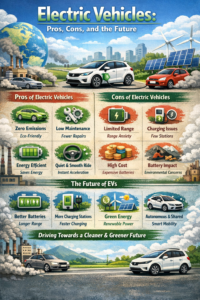
Pros of Electric Vehicles
One of the biggest advantages of electric vehicles is that they are environmentally friendly. Electric vehicles produce zero tailpipe emissions. This means they do not release harmful gases directly into the air while driving. As a result, they help reduce air pollution in both urban and rural areas. In contrast, diesel and petrol vehicles release carbon oxides and nitrogen oxides, which contribute to climate change and public health problems. By using electric vehicles, greenhouse gas emissions can be reduced significantly, especially when electricity comes from renewable energy sources.
Another important advantage is high energy efficiency. The motors used in electric vehicles convert a much higher percentage of energy into motion when compared to internal combustion engines. Traditional engines waste a lot of energy in the form of heat, while electric motors use energy more efficiently. This makes electric vehicles more economical in the long run.
Electric vehicles also have lower maintenance costs. They have fewer moving parts than traditional vehicles. There is no need for oil changes, fuel filters, spark plugs, or exhaust system repairs. Many electric vehicles use regenerative braking systems, which reduce wear on brake parts. Because of these features, maintenance costs are generally lower, helping owners save money over the lifetime of the vehicle.
Electric vehicles provide a better driving experience. Electric motors offer instant torque, which allows smooth and quick acceleration. EVs are also very quiet, reducing noise pollution and making driving more comfortable. Many modern electric vehicles are equipped with advanced digital systems, driver-assistance technologies, and software updates. These features improve safety, convenience, and overall performance.
Another major benefit is energy independence. Electric vehicles reduce dependence on fossil fuels and imported oil. This helps improve national energy security and protects countries from unstable oil prices. With home charging options, users can charge their vehicles easily and enjoy more flexibility and convenience.
Cons of Electric Vehicles
Despite their benefits, electric vehicles face several challenges. One of the most common concerns is limited driving range. Although the range of electric vehicles has improved over the years, it is still lower than that of petrol or diesel vehicles, especially for lower-cost models. Many people worry about running out of battery power before reaching a charging station. This fear is known as range anxiety and remains a major barrier for many buyers.
Another important challenge is charging infrastructure. Although charging stations are increasing, they are not evenly available everywhere. Rural areas and developing countries often have very few charging points. Charging an electric vehicle also takes more time than refueling a petrol or diesel car, even when using fast chargers. This can be inconvenient for long-distance travel or for people who do not have access to home charging.
The high initial cost of electric vehicles is another drawback. Even though running and maintenance costs are lower, the purchase price of electric vehicles is usually higher than that of traditional vehicles. This is mainly because of the high cost of lithium-ion batteries. While some governments offer subsidies and incentives, affordability is still a challenge for many people.
The environmental impact of battery production is also a concern. Mining materials such as lithium, cobalt, and nickel can harm the environment and may involve unsafe labor practices. In addition, battery recycling systems are still developing. If batteries are not disposed of properly, they could create new environmental problems.
Electric vehicle performance can also be affected by extreme weather conditions. Cold weather can reduce battery efficiency and driving range, while very hot climates can damage batteries over time. These factors may limit the use of electric vehicles in certain regions.
The Future of Electric Vehicles
The future of electric vehicles looks promising due to technological advancements, government support, and increasing environmental awareness. One of the most important developments will be improvements in battery technology. New battery types, such as solid-state batteries, are expected to offer longer range, faster charging, better safety, and longer life. As battery costs decrease, electric vehicles will become more affordable.
Charging infrastructure is also expected to grow rapidly. Governments and private companies are investing in fast-charging stations, wireless charging, and smart power grids. Ultra-fast chargers will make long-distance travel easier and more convenient.
Government policies will strongly influence the future of electric vehicles. Many countries plan to reduce or ban petrol and diesel vehicles in the coming years. Tax benefits, subsidies, and strict emission rules are encouraging people to switch to electric vehicles. Cities are also supporting EVs through special parking spaces and low-emission zones.
Electric vehicles will also play a role in renewable energy integration. Technologies like vehicle-to-grid (V2G) allow electric cars to store extra renewable energy and send it back to the grid when needed. This helps balance energy demand and supports clean energy use.
In addition, electric vehicles are important for the future of self-driving and shared transportation. Many autonomous vehicle projects use electric platforms because they are efficient and easy to control digitally. When combined with ride-sharing services, EVs can reduce traffic, lower costs, and cut emissions.
Conclusion
Electric vehicles represent a major change in the way people travel. Their advantages include reduced pollution, lower operating costs, better energy efficiency, and improved driving comfort. However, challenges such as limited range, charging infrastructure, high initial cost, and battery-related concerns still exist.
As technology continues to advance and support for clean energy increases, many of these challenges are expected to reduce. Although electric vehicles may not fully replace traditional vehicles immediately, they are clearly shaping the future of transportation. With continued innovation and responsible policies, electric vehicles can help create a cleaner, safer, and more sustainable world for future generations.
https://www.energysage.com/electric-vehicles/pros-and-cons-electric-cars/
